Food Waste Campaign
The Problem
46%
Of all food produced in Canada is wasted each year
10%
Food waste drives up food prices by ~10%, adding pressure on households already struggling with affordability
56.5 M Tonnes
of CO2e is generated by food waste in Canada, with the majority of it ending up in landfills, which is about the same as the province of British Columbia in 2024
#TooGoodToWaste
It is estimated that about half of all food produced in Canada is lost or wasted. This loss increases food prices, contributes significantly to climate change, and reduces the resiliency and future capacity of our food system.
Email Your Member of Parliament
Email your MP and let them know the change you want to see. You can find your MPs email address here with only your postal code.
You can use this script or write your own.
Dear [MP’s Name]
My name is [Your Name] from [City/Riding]. I’m calling because I’m deeply concerned about food waste in Canada. Did you know we waste nearly half of all the food we produce in Canada? That’s $58 billion wasted every year. And it is fueling food insecurity across the country.
I know that Canada can do better. We need a national strategy to measure, track, and prevent food waste from occurring. I’ve attached a brief with further details on what can be done. What steps are you or your party taking to track and reduce food waste, incentivize donation and reduce the waste from best before date labeling?
Thank you for considering my request.
[Your Name]
Call your MP
Calling your MP is a more impactful way to be heard. You can find your MPs phone number here. All you need is your postal code.
Unsure of what to say? We've written a script to help you out if you're stuck:
Hi, my name is [Your Name] from [City/Riding].
I’m calling because I’m deeply concerned about food waste in Canada. Did you know we waste nearly half of all the food we produce in Canada? That’s $58 billion wasted every year. And it is fueling food insecurity across the country. I know that Canada can do better. We need a national strategy to measure, track, and prevent food waste from occurring.
My question is: Are you and your party committed to a national strategy, and what specific actions will you take to ensure we hit those targets?
I’d appreciate a response at [Your Number]. Thank you!
MP Meeting
Connect with us!Meeting with your MP face to face is the best way to get your message across. It can seem intimidating, but they're elected to listen to and represent your concerns!
Ready to take the next step? Connect with us for support in booking a meeting. You can use the form below!
Nervous about speaking to your Member of Parliament?
The below video shows you just how easy it is to call your MP. You can even leave a message!
Tackling the Problem
Target, Measure, Act (TMA)
Target, Measure, Act is the international standard for cutting food waste (FW). Rather than guessing where the problem is, it requires governments and businesses to set a clear reduction target, measure how much food is being lost or wasted, and then take action based on that data.
Right now, FW continues to grow because we don’t know where the waste is happening, how much it is, or what’s causing it. TMA fixes that by turning food waste into something that can be tracked, managed, and reduced.
Target
To set progressive goals for reduction.
Measure
To track food waste and loss across the system.
Act
Take actions to ensure reduction goals are met.
Increasing Food Donations
Every year, large amounts of perfectly edible food are destroyed - not because it’s unsafe to eat, but because donating it is often assumed to be more complicated, costly, or risky than throwing it away. For many food businesses, disposal is the easiest option.
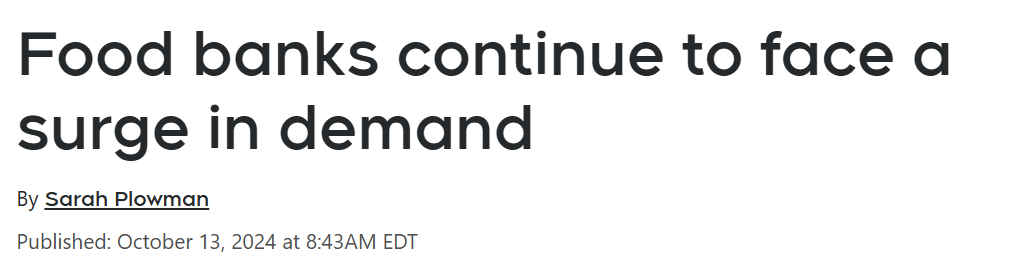
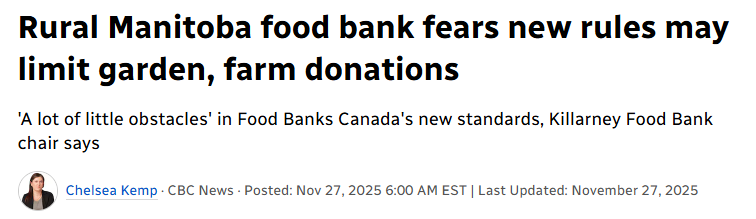
Canada’s food donation and redistribution system plays a critical role in preventing this waste, but it is under-resourced and unevenly supported. Without sufficient infrastructure, clear incentives, and coordination, surplus food often fails to reach the people or places that could use it.
Canada’s food donation and redistribution system plays a critical role in preventing this waste. Ensuring food is donated reduces food waste, eases pressure on food banks, lowers greenhouse gas emissions, and ensures that the resources used to grow, process, and transport food are not squandered.

Eliminate Best Before Dates
Best Before Dates (BBDs) are quality labels, not safety warnings. They tell consumers when a food is at its best taste or texture - not when it becomes unsafe to eat. But in practice, they are treated like expiry dates, causing huge amounts of perfectly safe food to be thrown away.
BBD confusion is one of the major drivers of directly avoidable household food waste. Consumers discard food unnecessarily, and retailers pull products off shelves- even when the food is still perfectly good. This wastes food, money, and all the resources used to produce it.
By removing BBDs, we can eliminate this confusion, keep safe food in circulation longer, and significantly reduce avoidable FW across households and retail.
For more detail on policy asks and research, please check out our budget submission.
A National Food
Donation Strategy
Food loss and waste (FLW) occurs across the supply chain. To quote the Government of Canada's Taking Stock report: “Canada committed to the United Nation’s 2030 Agenda for Sustainable Development, including Sustainable Development Goal 12.3, which sets a target to “halve per capita global food waste at the retail and consumer levels and reduce food losses along production and supply chains, including post-harvest losses” by 2030.”
Yet Canada lacks a consistent national strategy to address the issue systemically. At present, existing data is fragmented, incomplete, and often based on estimates rather than direct tracking. With 46% of all food produced in Canada being wasted annually, there is an urgent need to reduce FLW, especially as surplus food can be redirected to people. A coordinated, strategic approach is therefore essential to put Canada on track to reduce FLW.
Give today for a sustainable tomorrow.
Over the past century, our food system has had devastating effects on global health, our environment, and our wellbeing. Your donation is helping us change that. A sustaining gift supports our work creating a sustainable, resilient and compassionate food system.